In a nutshell
- ☀️ SPF vs UVA/UVB: SPF measures UVB (burning), not UVA (aging); look for the UVA-in-a-circle logo and 4–5 Boots UVA stars to ensure balanced, broad-spectrum protection.
- 🔍 Why higher SPF isn’t always better: Application and reapplication trump big numbers; SPF 30 vs SPF 50 offers marginal UVB difference—choose wearable textures and top up every two hours.
- 🧴 Application that works: Use the shot-glass rule for body and the two-finger rule for face/neck; don’t miss ears, hands, and scalp lines; reapply after swimming, sweating, or towelling—even with “water-resistant.”
- ⚗️ Filters and skin types: Mineral (zinc/titanium) suits sensitive skin but may leave a white cast; Chemical filters feel lighter and clearer; for hyperpigmentation, consider tinted minerals with iron oxides.
- 🚗 UK myth-busting: Clouds and car windows let UVA through; darker skin still needs protection; consider vitamin D supplements per NHS advice; make SPF a year-round habit with desk or glovebox stashes.
Brits love a blue-sky weekend, but our relationship with the sun is complicated—and sometimes costly. Talk to UK dermatologists and you’ll hear a consistent message: SPF is non-negotiable, yet widely misunderstood. From confusing labels to under-application, the gap between what’s on the bottle and what lands on our skin is where sun damage sneaks in. Having shadowed derms in Manchester clinics and followed families on breezy Cornish beaches, I’ve seen how minor tweaks—choosing the right filter, checking the UVA symbol, using enough product—shift outcomes. The headline truth: SPF is a daily health habit, as routine as brushing your teeth. Here’s what UK experts really want you to know, and how to put it into practice.
SPF, UVA, and UVB: The Science Behind the Label
Let’s decode the alphabet soup. SPF (Sun Protection Factor) measures how effectively a product shields against UVB—the rays that burn and raise melanoma risk. SPF is not a measure of UVA protection. In the UK and EU, look for the UVA-in-a-circle logo: it means the formula’s UVA defence is at least one-third of its SPF, a crucial benchmark because UVA penetrates deeper, driving photoaging and some skin cancers. You’ll also see the Boots UVA star rating (0–5) on many products sold domestically, indicating UVA balance relative to UVB.
Here’s the rub: real-world protection depends on how much you apply and how often. Lab tests assume 2 mg/cm²—far more than most of us use. In clinic audits I’ve observed, adults commonly apply a quarter to a half of the tested amount, which can turn your SPF 30 into something closer to SPF 10–15. The label’s promise is only delivered by generous, even application. Pair SPF with protective clothing and shade at peak hours (11 a.m.–3 p.m.), and prioritise broad-spectrum products that clearly advertise UVA + UVB coverage.
Why Higher SPF Isn’t Always Better
Derms repeatedly caution against fixating on the biggest number. SPF 30 blocks about 97% of UVB; SPF 50 blocks about 98%. That extra percent matters for fair or photosensitive skin, but the dominant variable is still application and reapplication. In Brighton one May, I followed a marathon runner who used an SPF 15 once at dawn; a sea breeze masked the burn until the finish line—proof that sweat, wind, and time erode protection faster than people think. For daily city life, SPF 30 with robust UVA cover is typically sufficient when used correctly; for prolonged outdoor exposure, SPF 50 earns its place.
Pros vs. Cons
- SPF 50 Pros: More UVB margin for imperfect application; useful for very fair, freckled, or medicated skin (e.g., retinoids).
- SPF 50 Cons: Can be thicker, pricier, and tempt longer sun exposure—a behavioural pitfall.
- SPF 30 Pros: Often more wearable; easier daily compliance; strong protection when applied generously.
- SPF 30 Cons: Less buffer if you under-apply or miss spots; reapplication discipline is key.
UK dermatologists emphasise strategy over swagger. Choose a texture you’ll actually wear, ensure UVA-in-a-circle or 4–5 stars, and then build habits: enough product, even coverage, and top-ups every two hours outdoors.
Application Matters: Derm-Approved UK Habits
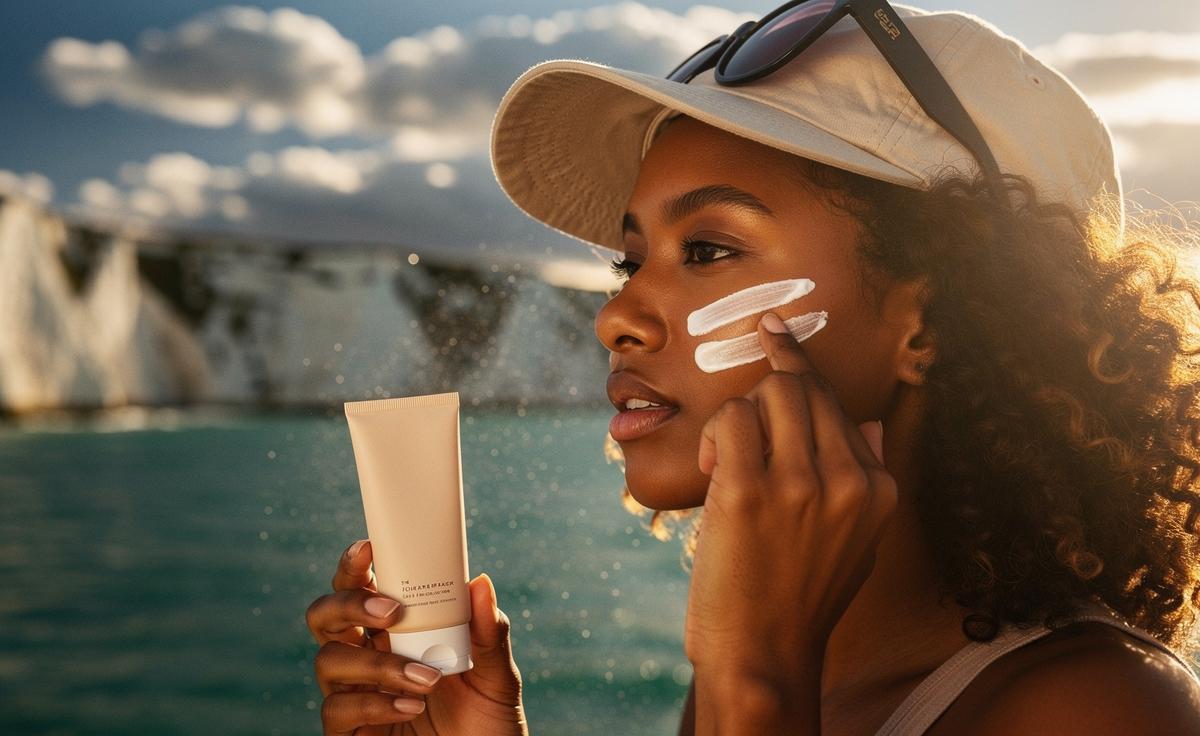
Technique turns labels into outcomes. Aim for a “shot-glass rule” (about 30–35 ml) to cover an adult body, and the two-finger rule (index and middle, knuckle to tip) for face and neck. Don’t forget ears, scalp lines, backs of hands, and feet—common hotspots in UK clinics. Reapply every two hours, and after swimming, sweating, or towel-drying. For makeup users, try a clear sunscreen gel or mist as a top-up; for children at school, label a roll-on and teach them the two-finger habit.
Decoding UK/EU labels helps in the aisle:
| Label | What It Means (UK/EU) | Practical Takeaway |
|---|---|---|
| UVA in a circle | UVA protection ≥ 1/3 of SPF | Assures balanced UVA cover for aging and deeper damage |
| Boots UVA stars | 0–5 stars, higher = better UVA balance | Aim for 4–5 stars where available |
| Water-resistant | Maintains protection after set immersions | Still reapply after swims and towelling |
| Very water-resistant | Stricter immersion testing | Best for watersports; don’t skip top-ups |
From Whitstable winds to Peak District hikes, remember: UV finds missed patches. Layer sunscreen as the final skincare step, 15 minutes before exposure; then hats, sunglasses, and UPF clothing add defence you don’t have to reapply.
Ingredients and Skin Types: Mineral vs. Chemical Filters
UK shelves offer two broad camps. Mineral (inorganic) filters—zinc oxide and titanium dioxide—work by scattering and absorbing UV, tend to be gentler for sensitive or rosacea-prone skin, and are less likely to sting eyes. Downsides? Potential white cast on darker tones and thicker textures, though modern micronised blends are improving. Chemical (organic) filters—like avobenzone, octocrylene, Uvinul A Plus, and Tinosorb S—absorb UV and often feel elegant under makeup.
Pros vs. Cons
- Mineral Pros: Suits sensitive skin; immediate protection; lower eye-sting risk.
- Mineral Cons: White cast risk; heavier feel; can cling to facial hair.
- Chemical Pros: Cosmetically elegant; easier for reapplication; transparent on all skin tones.
- Chemical Cons: May irritate very reactive skin; some filters are less photostable without boosters.
For acne-prone readers, look for non-comedogenic labels and gel-creams. For melanin-rich skin, prioritise sheer or gel sunscreens and tinted minerals using iron oxides to better guard against visible light–linked hyperpigmentation. The best sunscreen is the one you love enough to wear daily.
Myth-Busting in Britain: Clouds, Cars, and Darker Skin
Three stubborn myths keep UK derms up at night. First, “cloud cover means no need for SPF”—not so. Up to 80% of UVA penetrates cloud and glass, which is why left-side facial aging is seen in drivers. Second, “darker skin doesn’t burn”—melanin offers some in-built SPF, but not immunity from DNA damage. Late-stage melanoma diagnoses in people of colour are an avoidable tragedy. Third, “vitamin D needs sunbathing.” The NHS advises many adults to consider a 10 microgram (400 IU) supplement in autumn/winter; small, regular incidental exposure suffices for most in summer without chasing a tan.
Quick fixes that work in real life:
- Keep a car sunscreen in the glovebox for long drives.
- Use a tinted mineral for hyperpigmentation-prone areas.
- Set a calendar nudge for midday reapplication on beach days.
Last spring I tracked commuters in Leeds: those who kept travel-size SPF at their desk doubled weekday use versus those relying on a morning-only application. Access drives adherence—make sunscreen as reachable as your hand cream.
SPF isn’t a summer fling; it’s a year-round relationship with your future skin. Choose broad-spectrum formulas you’ll reach for daily, apply liberally, and reapply when life—sweat, meetings, sea spray—intervenes. Check for the UVA-in-a-circle, aim for 4–5 stars where possible, and pick textures matched to your skin and routine. Treat sun safety like seatbelts: invisible most of the time, vital in the moment that counts. As you head into the week, what one change—bigger bottle, desk stash, or two-finger rule—will you make to turn SPF knowledge into habit?
Did you like it?4.4/5 (27)